Chapter V 5/9
The Blessing of the Popes: The MCC in the Heart of the Church
The recognition, accompaniment and words of the Popes to the Movement.
Share chapter
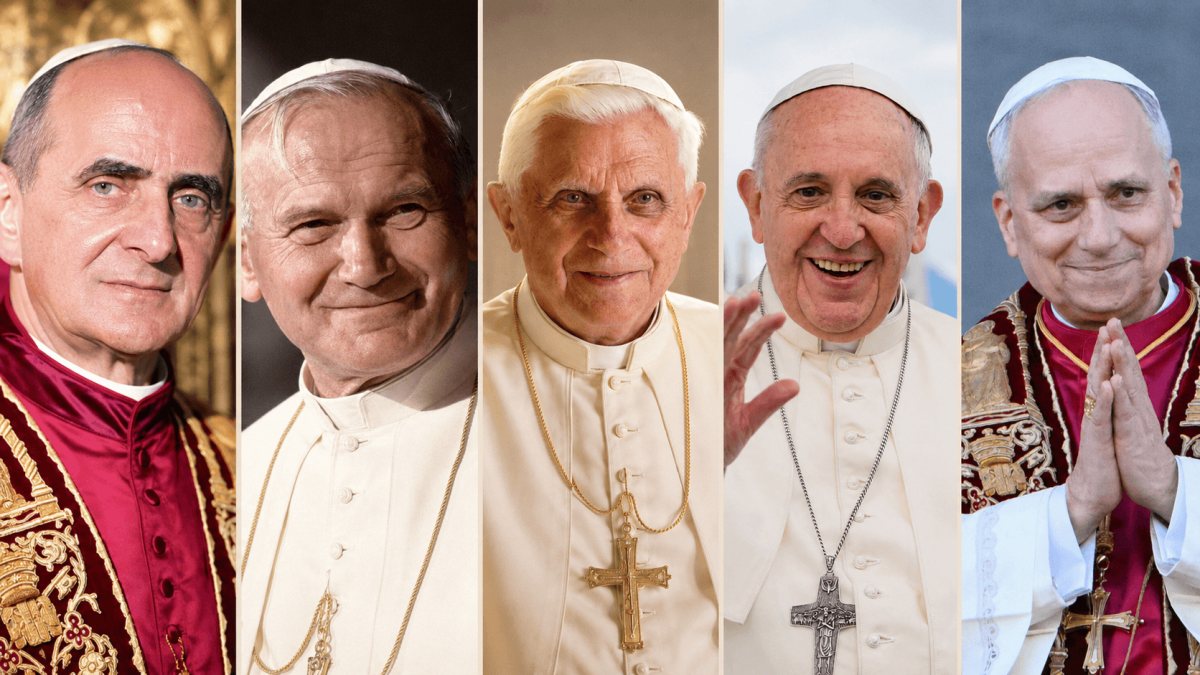
From its earliest days, the Cursillo Movement — the Movement of Cursillos de Cristiandad — has enjoyed the closeness, encouragement and blessing of the successors of Peter. Over the decades, the Popes have recognised in the MCC an authentic instrument of evangelisation, deeply rooted in Christian experience and fruitful in conversion and holiness.
Paul VI: A First Official Confirmation
In 1966, during the first World Ultreya in Rome, Pope Paul VI addressed the cursillistas with encouraging words. He asked: “Can the Gospel still conquer modern man, both in urban and agricultural civilisation?” With this prophetic question, he welcomed and encouraged the mission of the MCC: to make Christ present in the environments, through the strength of personal witness and friendship.
Saint John Paul II: A Companion on the Journey
None of the successors of Peter related to the MCC with as much frequency and depth as Saint John Paul II. Between 1979 and 2002, the pilgrim Pope addressed cursillistas on numerous occasions, confirming the charism of the movement and encouraging its fidelity and missionary renewal. In 1979, in a letter to Monsignor Hervás, he recognised that the MCC springs from the “heart of the Church” and urged it to remain faithful to its original inspiration. The following year, in a private audience with Eduardo Bonnín and other leaders, he encouraged the movement to continue its evangelising work with creativity and fidelity. In 1985, at the 2nd National Ultreya of Italy, he stated that evangelisation is a profoundly ecclesial act, not an isolated one. In the following years — especially at major gatherings such as the European Ultreya of 1993 in Seville and the national meetings in Italy and Spain — he placed the MCC within the dynamic of the new evangelisation, calling cursillistas to renew their missionary ardour. In 2000, during the 3rd World Ultreya in Rome, he urged: “Be fearless witnesses in the service of truth”, reminding them that Christ “has no hands but yours”. In 2002, on the 40th anniversary of the MCC in Italy, he reaffirmed that the movement is a providential response of the Spirit for the present times.
Benedict XVI: Renewed Commitment
At the 4th World Ultreya, held in Los Angeles in 2009, Benedict XVI sent a message through his delegate, giving thanks for the fruits produced by the MCC in the lives of the faithful. He invited cursillistas to deep catechesis and to a renewed commitment to Christ and to the Church. He emphasised that the MCC promotes the universal call to holiness and represents a significant instrument of the new evangelisation.
Francis: Communion and Mission Going Forth
Pope Francis deepened this tradition of closeness, placing the MCC within the context of the Church which goes forth, and emphasising two fundamental dimensions: communion and mission. Even before becoming Pope, as Archbishop of Buenos Aires, Jorge Mario Bergoglio saw in the MCC a living instrument of Christian renewal. Once he became Pontiff, he maintained and intensified this esteem through various gestures and messages. In 2015, when receiving European cursillistas at the Vatican, he stressed that the MCC does not grow through proselytism, but through the witness of life, encouraging them to go “ever further” — ultreya — and to live a spiritual life rooted in prayer, the Eucharist and reconciliation, so that they might transform their environments through the gentleness of the encounter with Jesus. In 2017, even when he was unable to attend major international gatherings in person — such as the World Ultreya in Fátima and the Inter-American Encounter in Chile — he sent messages and blessings, expressing spiritual support and encouraging perseverance in the original charism. In 2022, addressing Italian cursillistas, he reaffirmed that the MCC is not “alongside” the Church, but an integral part of her; he called for greater communion among the bodies of the movement, warned against personal agendas and attachment to positions, and urged the MCC to carry out its mission with humility, as missionary disciples who tirelessly bring the beauty of faith.
An Ecclesial Movement with Apostolic DNA
The words of the Popes are not merely words of praise; they are authentications of the ecclesial charism of the MCC. Over the decades, the Cursillo Movement has walked with the Church, under the gaze and guidance of the successors of Peter, confirming that its place is in the heart of the evangelising mission of the Body of Christ. The history of the MCC is also a history of fidelity: fidelity to the original inspiration, fidelity to the Church and fidelity to the Gospel. “Ultreya! Onwards!” — the cry that has echoed since the earliest days of the movement remains alive, now strengthened by the voice of the Successor of Peter, in continuous communion with cursillistas throughout the world.
Timeline: The Popes and the MCC
- 1944 / 1949 – Pius XII: birth and initial consolidation of the MCC; the movement begins under the papacy of Pius XII.
- 1966 – Paul VI: European / World Ultreya — recognition and encouragement of the mission of the MCC as an instrument of evangelisation.
- 1979 – John Paul II: letter to Monsignor Hervás and institutional support; reaffirmation of the MCC as being “from the heart of the Church”.
- 1980 – John Paul II: private audience with Eduardo Bonnín and leaders; encouragement towards fidelity and creativity in evangelisation.
- 1985 – John Paul II: intervention at the National Ultreya of Italy — ecclesial dimension and new evangelisation.
- 1993–2002 – John Paul II: various messages and encounters — European, World and national Ultreyas — strengthening the charism, mission and role of cursillistas.
- 2009 – Benedict XVI: 4th World Ultreya, Los Angeles — message of gratitude, invitation to deep catechesis and new evangelisation.
- 2015 – Francis: receives European cursillistas at the Vatican; reinforces ultreya, witness rather than proselytism, and a deep spiritual life.
- 2017 – Francis: messages to the World Ultreya in Fátima and to the Inter-American Encounter in Chile; blessings and support, even without physical presence.
- 2022 – Francis: address to Italian cursillistas — communion, mission, warning against personal agendas and call to humility.