Chapter II 2/9
The Diaries of Eduardo Bonnín
The intimate witness of a life of reading, prayer, friendship and the search for God’s will.
Share chapter
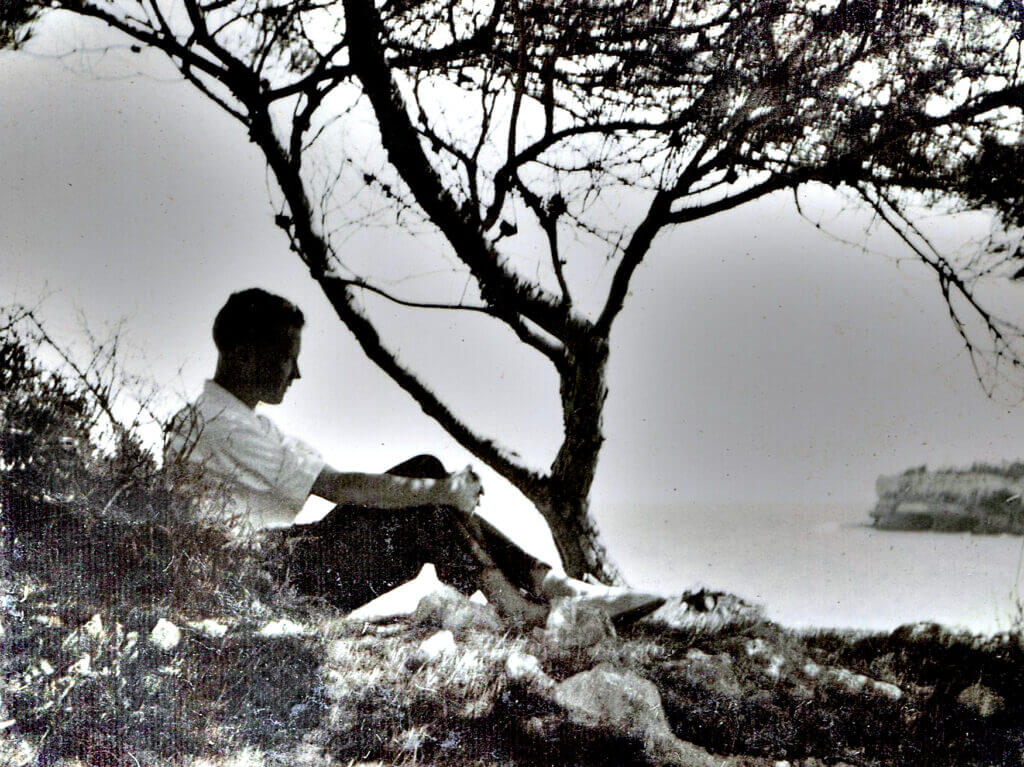
FEBA — the Eduardo Bonnín Aguiló Foundation — preserves a rare and priceless treasure: the personal diaries of Eduardo Bonnín Aguiló, written by his own hand between 1943 and 2007. They are an intimate and precious document that gives us direct access to the heart of a man who lived entirely for God.
These notebooks were not conceived as a way of systematising ideas, yet, when we read them, we perceive how Eduardo applied the mentality of the Fundamental Christian to his concrete life. In them we find his way of being, his way of living and thinking, the time he devoted to books, to friendships, to conversations with other leaders — moments in which he shared his projects, concerns and plans.
Day after day, step by step, Eduardo walked through the streets of Palma, through the villages of Mallorca and through many other places in the world, always with his eyes fixed on the will of God. It was in this constant journey — simple and faithful — that the life of someone whom many recognise as a saint of everyday life was built.
His writing has a very personal tone. He used his mother tongue, old Mallorcan, filled with unique expressions that characterised him: “Ja ho val!”, “La mala hora!”…
It is in the diaries that we find the most authentic Eduardo, without filters — Eduardo in his 100% genuine form. Through his words, we relive tender moments, meaningful encounters, friendships cultivated through endless comings and goings. An urban pilgrim, a walker through humble neighbourhoods, with his feet firmly on the ground and his heart always raised on high.
These pages are the mirror of an intense existence — not only in the tasks of daily life, but also on the spiritual level. Eduardo constantly sought the Lord, with whom he maintained a continuous dialogue, full of trust and tenderness:
“En Vos confii.”
“Vos Dictau.”
Brief phrases, almost inner prayers, that sum up the total surrender of his life: his will, time and energy placed at the service of God. A true practical decalogue of someone who rose each day to seek, with courage and humility, the divine will.
His life is a living lesson: holiness made normality, and normality made holiness.
To read his diaries is like entering his world, accompanying him to daily Mass, to the bookshop, on a visit to a friend, at a meeting with ecclesial leaders, in a gathering — at times inspiring, at times tedious.
It is, ultimately, to immerse oneself in a time without social media or digital distractions, and to discover the true place where everything happened: Eduardo’s living room and kitchen, where his inner life was slowly prepared with time, care and surrender — and where the “menu” that would later be offered in the Cursillos of Mallorca was born.
It is like watching the film of his life from the front row. The life of someone who, without pretension or pose, raised friendship to an unprecedented spiritual dimension, transforming it into a gift, a path, a living bridge between God and others.
What the diaries reveal to us is that Eduardo was a profoundly normal man… and profoundly holy. In them we see the way he cultivated his coherence, his firmness in decisions and his impressive constancy on the path he had begun.
And there is so much truth in these pages that, when reading them, it becomes easy to recognise the silent yet constant presence of the Lord accompanying his steps.
Those who draw near to these writings do not remain indifferent. It is difficult to resist the charm of a man as simple as he was profound, who gave everything to follow an intuition breathed by the Spirit, and who today continues to bless the world whenever two or more gather in the name of Jesus Christ.